


Hello!
Sunken Studio is a working pottery studio in South Bank, Leeds.
It’s a place to make with clay alongside other people - to learn, test ideas, and spend time with the material in a calm, open space. The studio is set up to support different ways of working, whether you’re just beginning or building a longer-term practice.
People work side by side here, sharing knowledge, questions and the everyday rhythm of making. Over time, it becomes a place to return to - not just for the work, but for the people and the way the studio welcomes both.
“Really knowledgeable guidance from the experts in a friendly, welcoming environment. Highly recommend.” Yoga Bradford
Hand-building Courses
“I had an amazing time learning how to handbuild. The studio is so well set up and everyone was so welcoming. I would highly recommend this to anyone wanting to learn or improve their skills.” Leona KB

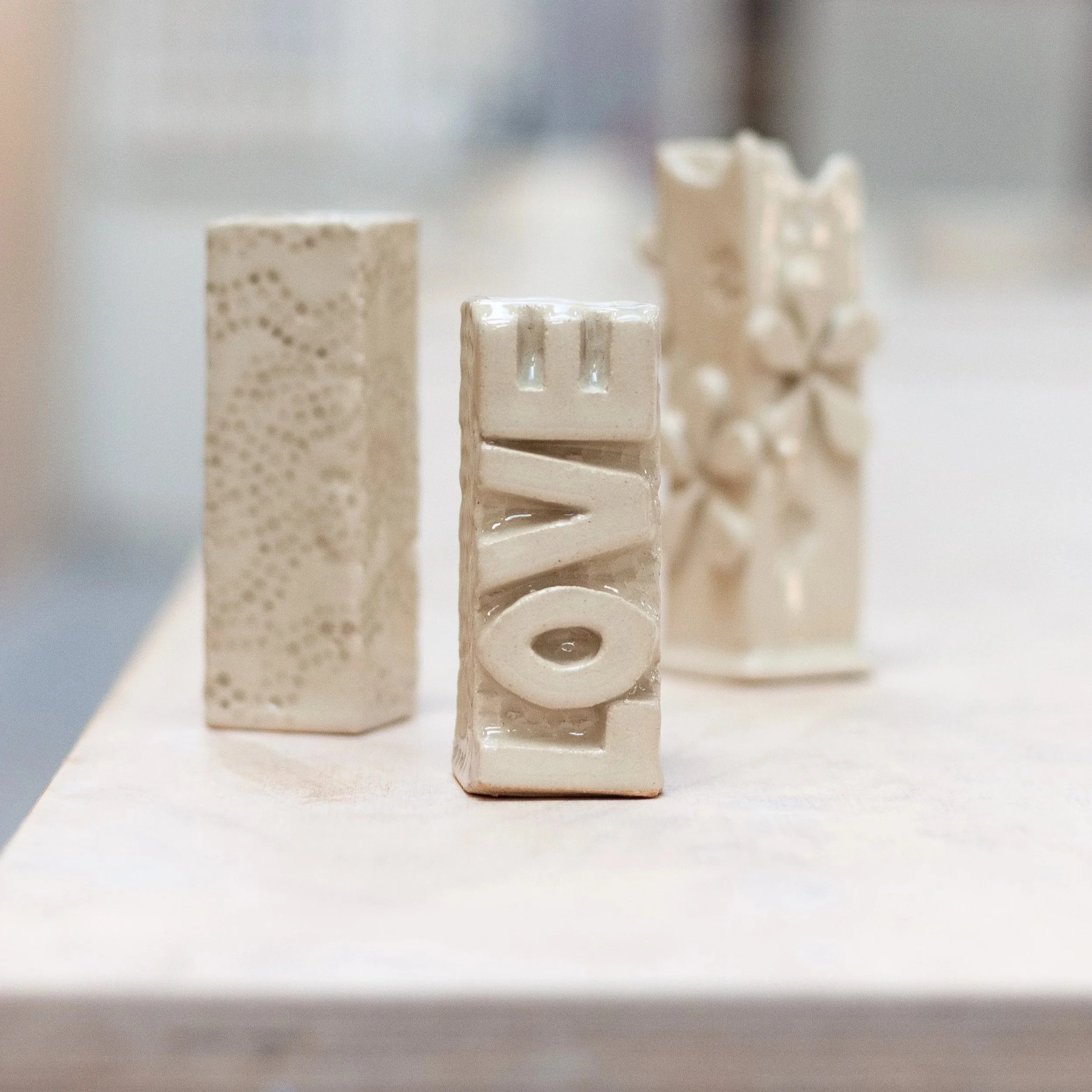
Pot Luck
A short, experimental handbuilding session designed to help you understand how you like to work with clay - from structured and precise to expressive and sculptural.
Everyone begins with the same starting point: a single extrusion of clay. From there, you’ll cut, join, reassemble and refine the form, shaping one small pot through a series of decisions made by hand. The session introduces essential handbuilding techniques while offering a clear sense of your own making instincts, helping you decide whether you’re drawn towards sculptural approaches or functional, refined forms - and whether you’d like to continue on to Foundations in Pottery Making.
At its heart, Pot Luck is about learning how you move through uncertainty: a clear road, a few limits, and enough support to begin.
Duration: 1.5 hours
Prerequisites: None
Includes: All materials, tools, clean aprons, firing of one finished piece per person.
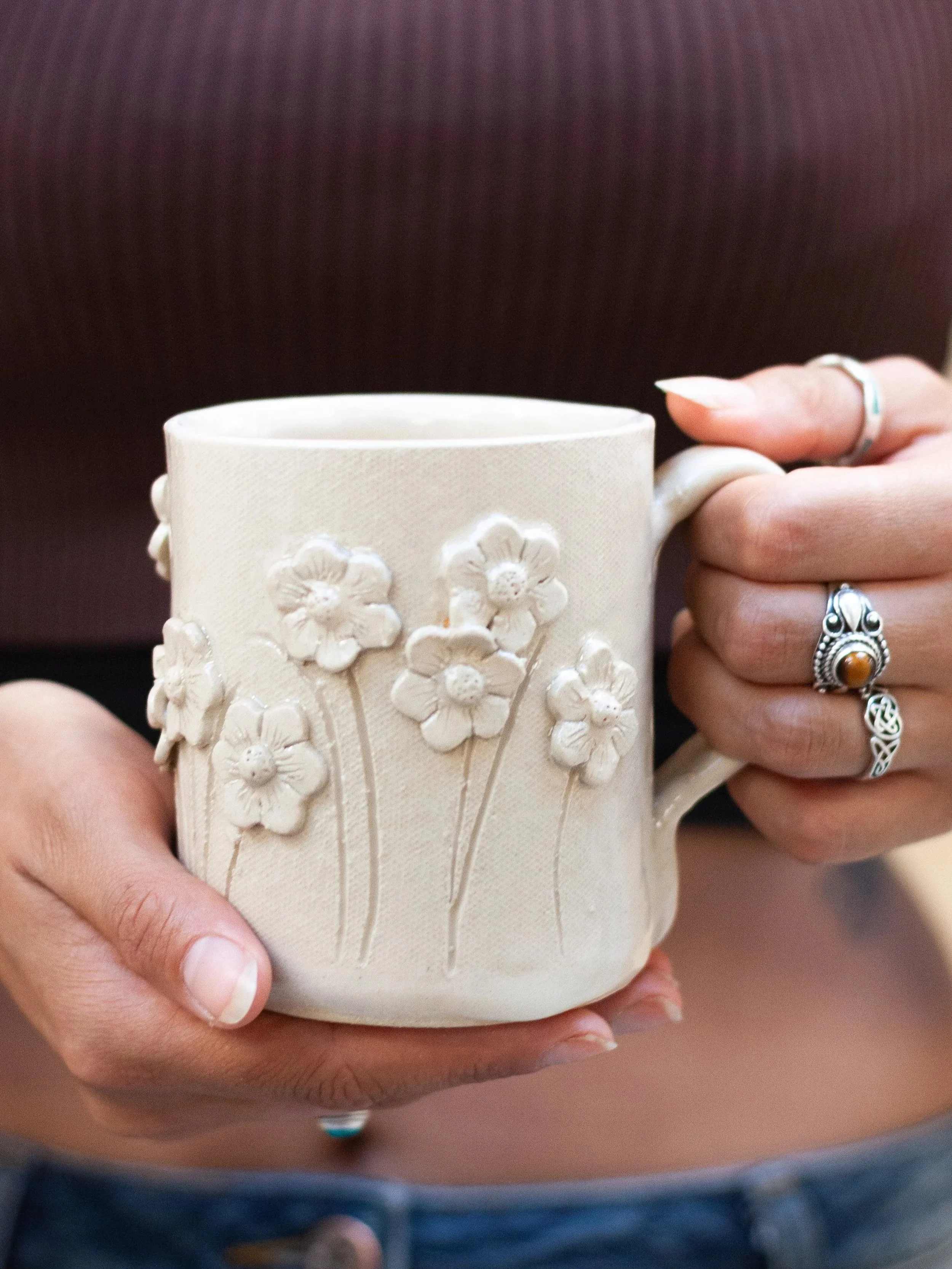
Make a Mug
A short, structured introduction to handbuilding. You’ll work with prepared slabs of clay to make your own mug from start to finish, refining, assembling and adjusting the form as you go.
Your tutor will guide you through joining techniques, handle attachment and surface detail, with attention to how form, structure and surface work together. The focus is on understanding how clay behaves in the hand, and how simple, well-paced processes can lead to considered, well-made results.
This session is ideal for anyone who prefers learning by doing and wants to understand how handbuilding differs from throwing on the wheel. For many people, it becomes a first solid step into clay - and a natural lead-in to Foundations in Pottery Making.
Duration: 2.5 hours
Prerequisites: None
Includes: All materials, tools, clean aprons, firing of one finished mug per person.

Foundations in Pottery Making: Handbuilding Pathway
A steady, supported introduction to pottery making, focused on building confidence through regular weekly practice and time spent understanding how clay behaves in your hands.
This six-week course follows the Handbuilding pathway, beginning with bench-based making using coils, slabs and modelling techniques. You’ll explore form, structure and surface through slower, more adjustable processes by hand, developing both technical understanding and personal working methods over time.
In Week 5, the group moves behind the wheel for an exploratory throwing session, using the experience to better understand form, movement and material behaviour. In Week 6, the course concludes with glazing and surface work.
Many people return to this course more than once. Each iteration builds confidence, expands skills, and opens the door to more individual projects over time. No prior experience is needed - and you don’t need to get everything right on the first pass.
Duration: 6 weeks
Session length: 2.5 hours per week
Prerequisites: None
Includes: All materials, tools, equipment, and clean aprons
Firings: Up to 20 litres of fired work per person, glazed and processed through our kilns. Additional volume available for a per-litre fee.
If you already know you’d like to spend longer learning, the Foundations in Pottery Making Bundle includes two six-week courses and saves £100 - a steady way to continue, with time for skills and friendships to deepen.
Throwing Courses
“A gem of a studio! I did the 12-week Pottery for Beginners course and absolutely loved it. The space is beautiful, really well equipped and the tutors are brilliant at sharing their knowledge and encouraging you at every step.” Chloe H


Throwing Taster
A short introduction to making pots on the Potter’s wheel, for anyone curious about clay, movement and form.
You’ll be guided through the essential stages of wheel work - centring, opening and lifting a simple vessel - with attention to how posture, pressure and pace quietly shape what emerges. The focus is on beginning well, learning through doing, and understanding how small decisions in the hands affect the outcome.
For many people, this becomes the first step: a wheel, some structure, and enough support to begin making - and a natural lead-in to Foundations in Pottery Making.
Duration: 2.5 hours
Prerequisites: None
Includes: All materials, tools, equipment and clean aprons.

Foundations in Pottery Making - Throwing Pathway
A steady, supported introduction to pottery making, focused on building confidence through regular weekly practice and time spent understanding how clay behaves in your hands.
This six-week course follows the Throwing pathway, with the potter’s wheel as the main focus for the first four weeks. You’ll learn to centre, open, lift and finish simple forms, using repetition and rhythm to develop control and consistency. The emphasis is on material understanding, skill-building, and gradually becoming more independent in how you work.
In Week 5, the group moves to the bench for a diagnostic and experimental session, adapting thrown forms by hand and exploring how processes connect across making approaches. In Week 6, the course comes together through glazing and surface work.
Many people return to this course more than once. Each iteration builds confidence, expands skills, and opens the door to more individual projects over time. No prior experience is needed - and you don’t need to get everything right on the first pass.
Duration: 6 weeks
Session length: 2.5 hours per week
Prerequisites: None
Includes: All materials, tools, equipment, and clean aprons
Firings: Up to 10 litres of fired work per person, glazed and processed through our kilns. Additional volume available for a per-litre fee.
If you already know you’d like to spend longer learning, the Foundations in Pottery Making Bundle includes two six-week courses and saves £100 - a steady way to continue, with time for skills and friendships to deepen.
Glaze Courses
“Wonderful community space. I’ve been a member here since January 2024 and have truly enjoyed every moment I’ve spent here. The facilities are excellent and the tuition first class. Can’t recommend giving a class or tester session a go highly enough! You’ll find yourself wanting to join our community in no time!” Phil A
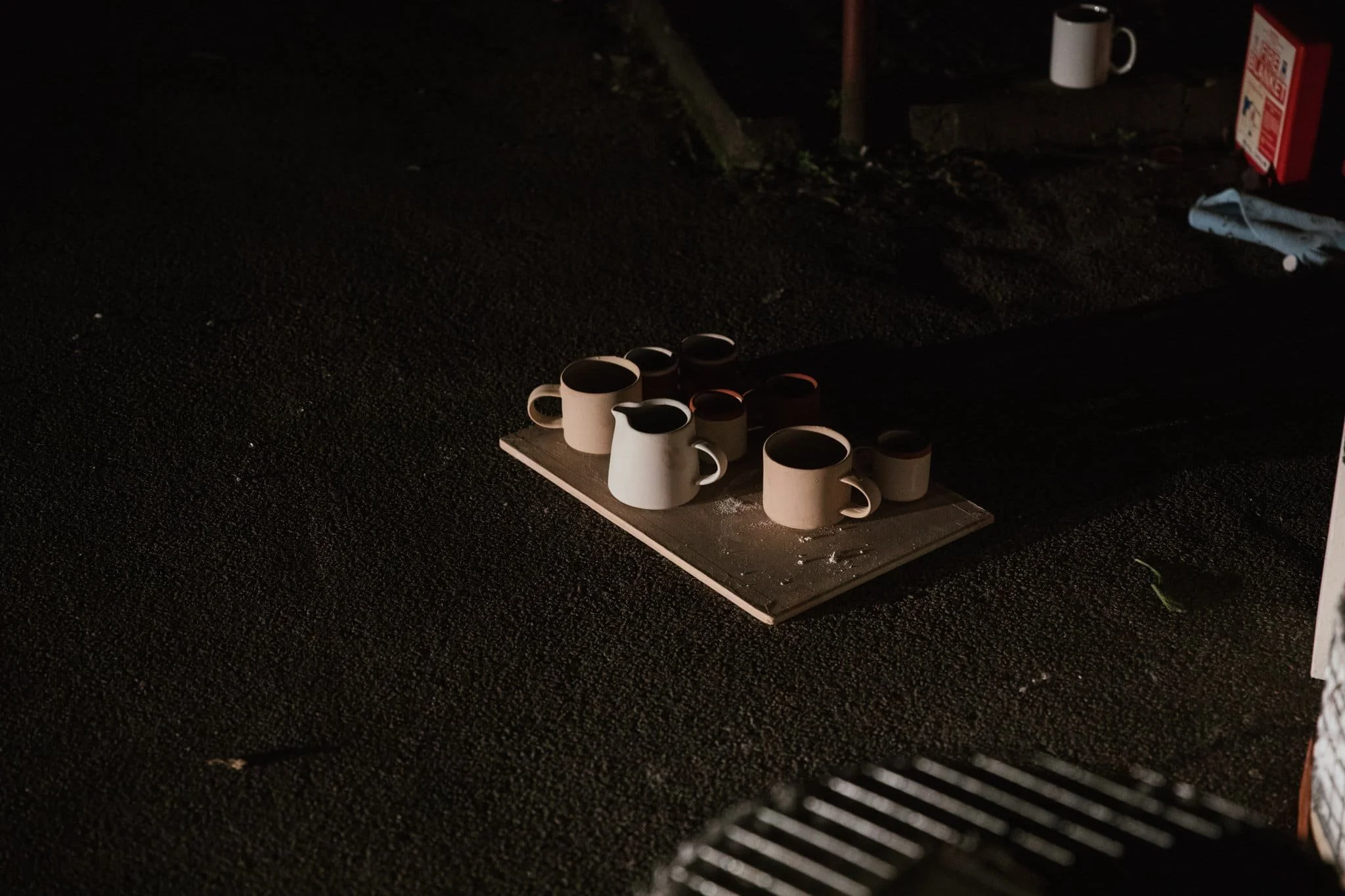

Make a Glaze
A practical course for people a little further along their pottery making path, who want to understand what’s really happening inside their glazes.
This course gently pulls back the curtain on glaze making. You’ll work with raw materials, learn how glazes are built, and begin to see how small changes in recipe and firing lead to very different surfaces and results. Nothing is treated as mysterious or out of reach - the aim is to make the systems visible, so you can work with confidence rather than guesswork.
Across the sessions you’ll mix, test and fire your own brushing glazes, building steady, repeatable ways of working that you can carry into your own practice.
For many people, this becomes the moment glaze starts to feel navigable - not a secret world, but another part of the road.
Duration: 15 hours
Prerequisites: None
Includes: Raw materials for in-session testing, fired test tiles and test glazes to take away.
Led by: Chris Crawford

Glaze Club
Glaze Club is for people who have completed Make a Glaze and want time, space and support to continue developing their glazes through steady practice.
This is where ideas are tested, results are examined, and the systems behind your work become clearer. With access to studio resources and guidance from Chris, you’ll use the sessions to adjust recipes, interpret firings, and slowly build your own working glaze language.
There’s no fixed curriculum. Instead, Glaze Club offers a rhythm: a place to return, to refine, and to keep learning through doing.
Raw materials are available on a pay-per-use basis, so you can work flexibly as your understanding deepens.
Led by: Chris Crawford
Decorative Courses
“I went here with a friend to do pottery painting and we had the best time! It was such a relaxing and welcoming space. There was a great range of paints and items to choose from, and the whole experience felt really special.” Katie M


Paint a Pot
A gentle, design-led session for people who enjoy working with colour, image and surface.
You’ll work on one of our in-house bisque stoneware pots, exploring how colour behaves on form, how images sit on curved surfaces, and how repeated marks build balance and movement. The session is unhurried, with time to plan, paint, adjust and refine - letting the work develop at its own pace.
Some people arrive with clear ideas. Others discover their direction through the act of painting itself. Both are welcome here.
All finished pieces are glazed and fired in-house, ready for everyday use.
Duration: Up to 2.5 hours
Prerequisites: None
Includes: Use of all materials and tools.
Enrichment Programme

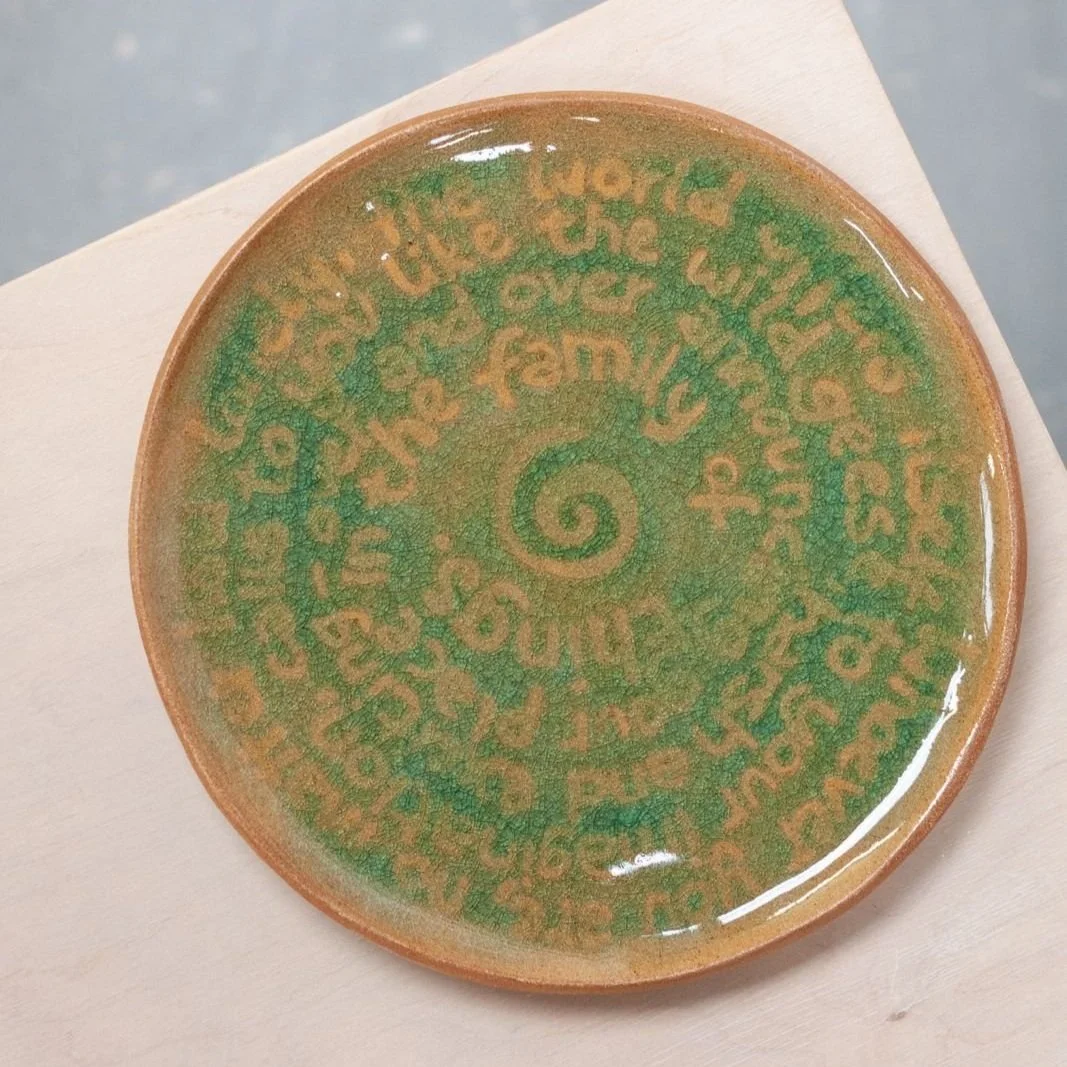
Visiting makers, exhibitions, events and markets
An important part of making is how your thinking shifts over time - through conversation, shared experience, and spending time close to other people’s work.
The Enrichment Programme creates space for that kind of learning. It brings together exhibitions, focused sessions, and conversations with visiting makers who share their own practice in depth. The emphasis is on particular interests and ways of working, rather than broad overviews - offering time to look closely, ask questions, and let ideas settle into your own practice.
Some sessions may include teaching, but the core of the programme is exchange: listening, reflecting, and learning through proximity to specialist knowledge.
New Enrichment events are first announced via the newsletter.
Membership
Space to Breathe
After completing a course, many people choose to continue as studio members.
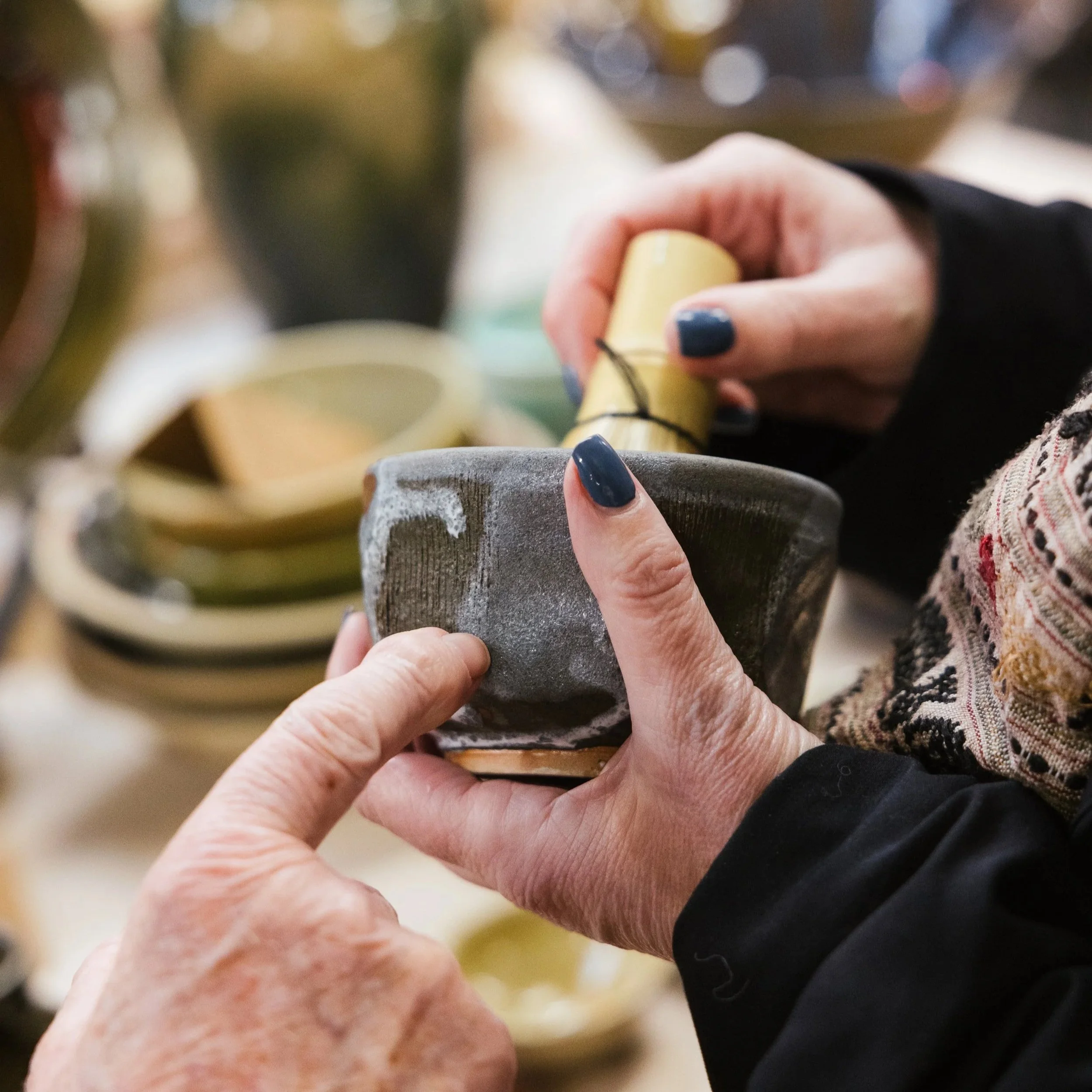
Membership offers time, space and access to the studio beyond structured teaching - a way to keep returning to the work as it develops. Members work alongside one another, often sharing ideas, questions and small discoveries as projects take shape.
Support is available through the week, with tutors and specialist staff on hand for guidance as needed. It’s not about being watched or assessed - just knowing that someone is there when a question arises, or when a piece needs another pair of eyes.
Over time, this rhythm of courses, membership and shared practice becomes something people settle into: familiar, dependable, and quietly sustaining.
Our Teaching Philosophy


Building Strong Foundations and Respecting Your Time
At Sunken, our courses begin with the fundamentals: how clay behaves, how forms are built, and how small, steady decisions shape what you make. You’ll spend time working with core forms - cylinders, bowls, straight-sided pots - as a way of building familiarity and confidence in your hands.
Across the programme, you’ll also encounter surface and glazing, so your understanding of the material develops as a whole. These foundations are about giving your work somewhere solid to rest.
When people are ready to move beyond structured courses, membership offers the time and space to follow their own questions. Members work at their own pace, with access to a well-resourced studio and steady support, where specialists are on hand as projects evolve.
Our teaching is intentionally simple and measured. A few clear limits create the conditions for focus. Each step builds on the last.
We’re mindful of people’s time. There are many ways to learn ceramics, but working in a shared studio with experienced tutors means you’re not left piecing things together alone. Questions are answered as they arise, problems are worked through in the room, and understanding grows through practice.
The studio itself plays a role in this. Located in the centre of Leeds, it’s a purpose-built, specialist space - organised, calm, and designed to support sustained making. Over time, it becomes a place to return to, where work deepens through familiarity and connection.
Together, the structure of the courses and the openness of membership create a steady path: foundations first, then the space to continue.
People


Who Joins Our Courses?
Many people arrive in a bit of a personal storm. A move to a new city. A stretch of grief. A moment where work, life or identity is shifting, and they need somewhere steady to land.
They don’t usually arrive with a fixed plan. They come with a sense that they want to spend their time differently - more slowly, more deliberately, with their hands involved in the work.
Clay suits that instinct. It asks for care and attention. It rewards steadiness. It has its own pace, and working with it gently reshapes how people move through their time. Building forms, managing fragility, returning week after week - all of it creates a kind of focus that many people find they’ve been missing.
The people who join our courses are often looking for something tangible. They enjoy problem-solving, making things for themselves, and learning through doing. For many, the studio becomes a counterweight to work that is fast, digital and admin-heavy - a place where effort is visible, time feels contained, and small decisions matter.
In the studio, you’ll find adults who value calm and the chance to ask questions as they go. The atmosphere is organised, spacious and welcoming, with everything in place to support sustained making. Located just outside the city centre, and easy to reach by public transport, it becomes a place people return to - not to escape life, but to meet it with a little more steadiness.
Our Team
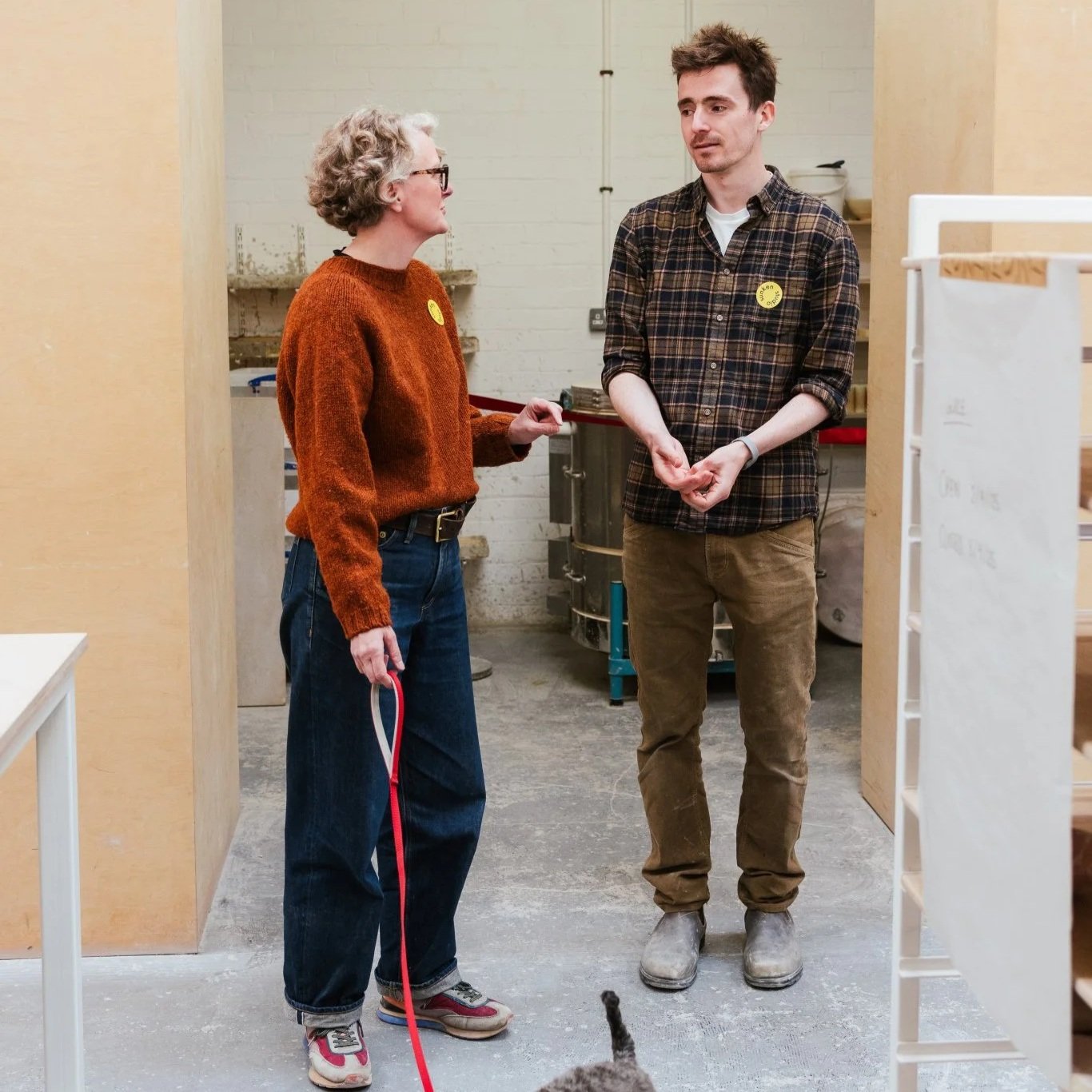
Our team brings together people from many different routes into making and teaching.
Some have followed formal study through foundation courses and postgraduate degrees in areas such as ceramics, art and design, jewellery and metalsmithing, and industrial design. Others have come to the studio later, after working in different fields and finding their way into clay through experience, retraining and practice. A number of our tutors also hold teaching qualifications, and all are committed to creating steady, supportive learning environments.
What connects the team is not a single background, but a shared approach: careful attention to people in the room, respect for different ways of learning, and a belief that skill grows through practice, not pressure.
Whether you’re working with someone who has been teaching and making for decades, or with a tutor who is still actively building their own practice, you’ll be guided with the same care - through explanation, demonstration, and space to find your own way of working.
Resources and Facilities


Studio Environment
Our studio is a dedicated, adult-only ceramics space in central Leeds - a place many people arrive at when they’re looking for something steadier to step into.
It’s specialist-led, calm and supportive of sustained making. The space is open and uncluttered, with room to work, think and move without feeling rushed. Everything is arranged to make the work feel manageable, even when the rest of the week doesn’t.
Sessions are for adults aged 18+, and you’ll often be working alongside experienced studio members, which adds to the attentive, settled atmosphere in the room. Over time, the studio becomes a place people recognise - somewhere familiar to return to, where work deepens through practice and presence.

Tools and Equipment
The studio is set up to support focused, independent making, with the tools and equipment you need close at hand.
Wheels: Each participant on wheel-based courses works on their own wheel for the duration of the course. This gives you a consistent place to return to each week and keeps the rhythm of learning steady. Wheels are only shared when a project genuinely calls for it.
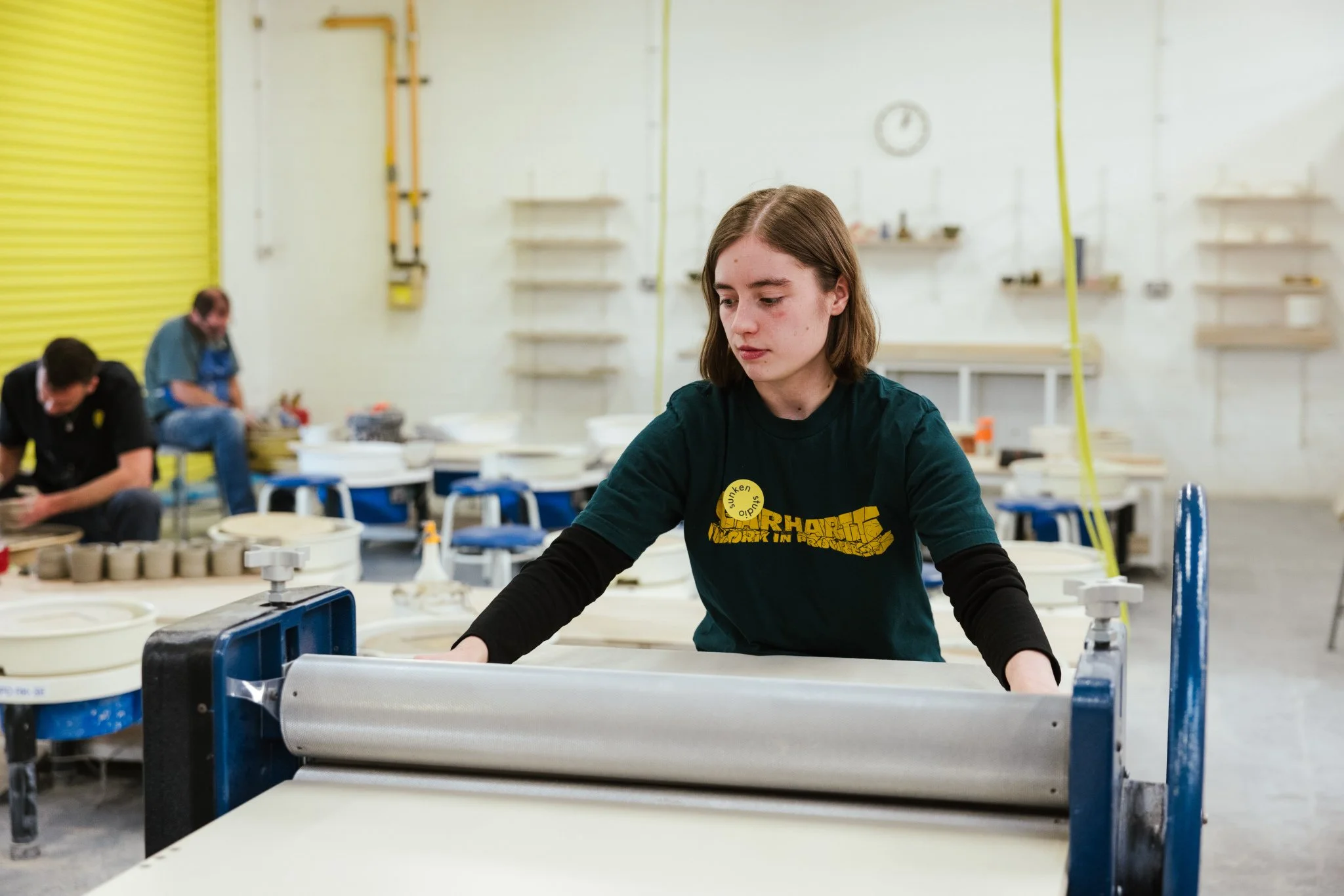
Handbuilding equipment: The studio is equipped for a wide range of handbuilding approaches, including a slab roller, large workbenches, whirlers, rolling mats and pins, texture tools, and a wall-mounted lever extruder with dies for coils, handles and formed lengths. There’s also a selection of bisque, plaster and wooden moulds for press, drape, hump, slump and drop-form work - giving you time and space to explore different ways of building form.
Small tools: All essential tools are provided during your course.
Kilns: Electric kilns on site are used for firing work, with all firings managed by the studio team as part of the course structure.
Storage & clay management: Work-in-progress is supported by damp storage bays, poly boxes and reusable storage crates, with clay management handled as part of your place on the course - so you can focus on the making rather than the logistics.
Wedging bench: A heavy concrete wedging bench, set lower than the main workbenches, provides a comfortable, stable place to practise wedging - one of the first skills people begin to settle into as they build their relationship with the material.

Materials
The materials you work with are chosen to support reliable making.
Clay: All clays used in the studio are stoneware, selected for their suitability for specific processes and firing conditions. Clay is managed through the studio’s recycling system, so material is used carefully and waste is kept to a minimum.
Glazes: A core range of ten house glazes is available for use in classes and by studio members, offering a dependable set of surfaces for both functional and exploratory work.
Slips & underglazes: Slips and underglazes are provided in sessions where surface work forms part of the course structure.
Raw materials: All raw materials needed for glaze formulation are supplied during glaze courses, so you can focus on learning and testing without needing to source materials independently.