
Nova Smith, moulds, and making things workable
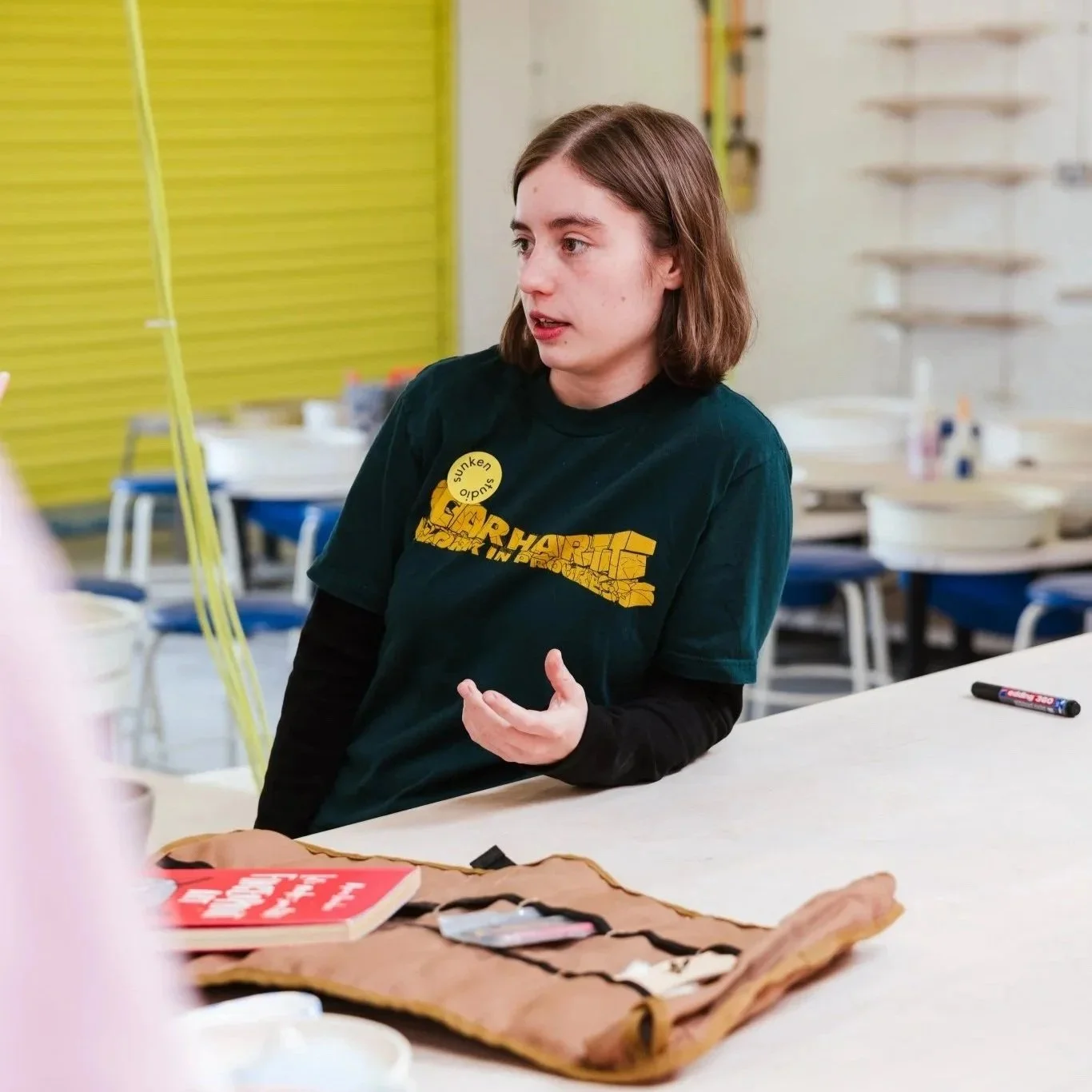
Nova talking with studio members
Long-term involvement
Nova has been part of Sunken Studio since 2019. She joined while still at sixth form, just before starting foundation studies, and has stayed with us through her degree and into her own developing practice. Over that time, she’s become a steady presence in the studio - someone deeply involved not just in teaching and making, but in the quieter, practical decisions that keep a shared space working.
Systems and shared space
One of the things Nova has always gravitated towards is the organisation of systems: how materials move through the studio, how tools are shared, and how processes can be optimised. That interest has fed naturally into conversations we’ve been having over the past few years about mould making, slip casting, and where those processes realistically sit within a communal ceramics studio.
Video: De-moulding a test cast
Constraints as design parameters
Sunken isn’t a fully equipped industrial ceramics facility, and it isn’t trying to be. While there’s regular interest in mould making and slip casting, the demand has never quite justified the level of investment - or the practical compromise - that would come with fully integrating plaster-based production into a shared clay space. Plaster and clay complement each other well, but during the making stages they don’t coexist easily. Different requirements around waste, surfaces, storage, and moisture mean they benefit from a degree of separation.
We’ve responded in the same way. Despite having team members confident working with moulds, much of our mould making has been outsourced, simply because the realities of space, time, and risk don’t always align with how a shared studio needs to function.
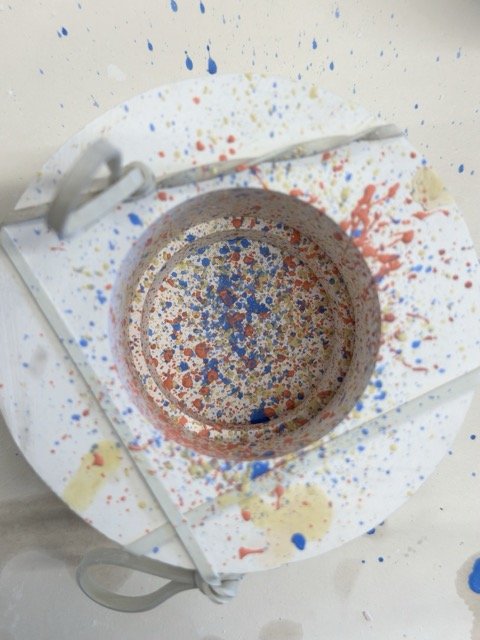
Parian porcelain cast in mould with coloured clay tests
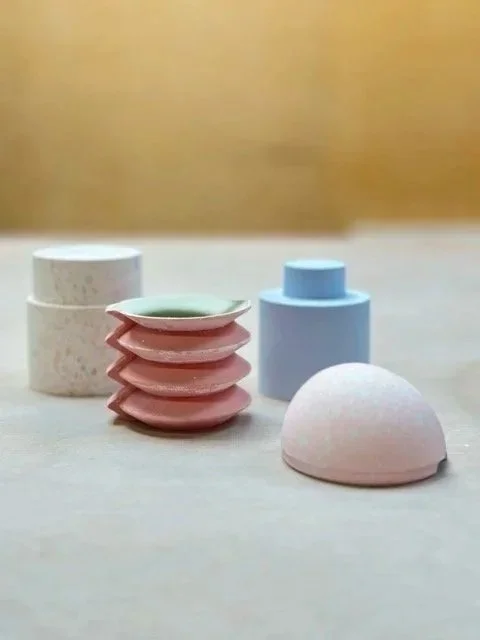
De-moulded Parian porcelain test pieces (unfired)
Recurring questions
At the same time, the questions keep returning - from members, tutors, and from us. How do you develop an understanding of moulds without turning the studio into a production site? How do you skill people up enough to make informed decisions about what to do themselves, what to adapt, and what to outsource?
These are familiar dilemmas for many makers leaving university or working in a home studio pottery. You might know that mould making is important to your practice, but lack the space, equipment, or justification to take it on fully. You might be working with a wheel, or handbuilding, and wondering how other processes can support that work without taking over completely.
Practice and overlap
Nova’s own practice sits in that space of overlap. Trained as a silversmith and designer maker, her work explores objects that are sculptural and functional, but not utilitarian - things that invite use rather than demand it. Her interest in mould making comes not from production efficiency, but from curiosity about systems, repeatability, and how ideas move across disciplines. Jewellers and ceramicists often solve similar problems using different materials, and her research looks closely at those shared principles.
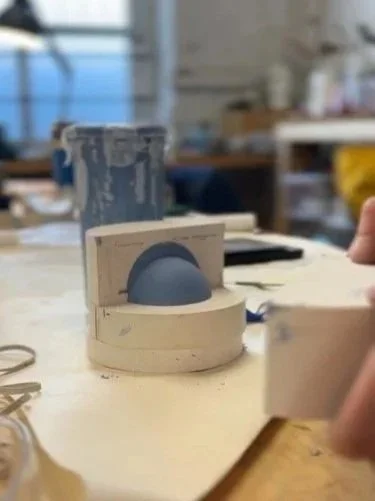
Plaster mould and cast during de-moulding
From research to teaching
That way of thinking has shaped the development of Modular Moulds. Rather than teaching industry-standard methods or production-scale workflows, the course is built around low-tech, repeatable approaches that people can realistically continue - whether at Sunken, at home, or in a shared space. It acknowledges the constraints most makers work within, and treats them as design parameters rather than limitations.
It also leaves room for play. Experimentation, testing, and adjustment are built into the process, alongside honest conversations about what’s viable in different contexts. The aim isn’t to turn people into mould makers overnight, but to give people enough understanding to synthesise ideas, make informed choices, and see how moulds might sit within their own practice.
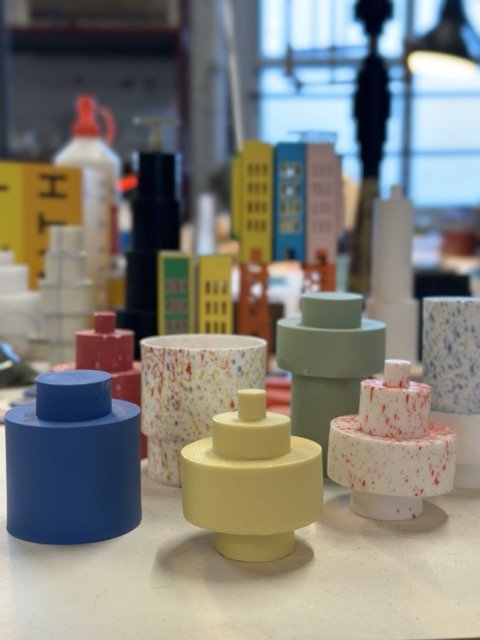
Fired parian porcelain test pieces alongside paper prototypes for metalwork
Programme development
In that sense, the course reflects something broader about how Sunken develops its programme. We’re interested in creating opportunities that respect people’s time, resources, and working realities - and in supporting practices that can be sustained.
Nova has been part of those conversations for a long time. This workshop is simply one place where they’ve come together.