
House of Fu: a commission at a turning point

During the winter of 2021, the studio was closed for what became the longest stretch of lockdown. It was an intense period. There was uncertainty, pressure, and a sense of being pulled in different directions - but also a degree of optimism. Research that had been underway the previous year was beginning to consolidate into something tangible, and for Sunken Studio that took the form of a large-scale commission with House of Fu.
House of Fu were preparing to open a new ramen restaurant on The Headrow. They’d been following the studio’s work for some time, and were keen to support local makers. In particular, they wanted their tableware to be made close to home - dishes that hadn’t travelled far, and whose story was visible in how and where they were made.


We were commissioned to fabricate a full range of dishes for service. Every piece was thrown on the wheel and glazed at Sunken Studio, less than a mile from where the restaurant would open. The glazes were developed in-house, designed to work hard in a busy restaurant environment while supporting the food they were made for. The pieces were generous and functional, designed with use in mind rather than display.
At the time, the studio was still primarily a teaching-led space. With workshops paused, production became one of the few ways we could keep working. That shift brought opportunity, but it also brought pressure. The commission relied heavily on Chris’s capacity to throw consistently at volume, drawing on research he’d been developing around materials and glaze throughout the pandemic. His role was central - technically, practically, and creatively - and the success of the work depended on that focus and expertise.

Alongside this, I was working to keep the rest of the business moving. There were financial and operational challenges to resolve. We were both being pulled towards different kinds of work at once: production on one side, and the wider responsibility of sustaining the studio on the other.
Over time, the commission clarified something important. While we were able to produce at scale, and to a high standard, it also became clear that production and education were asking different things of the studio. Both mattered deeply to us, but they were competing for the same finite resources - time, energy, and people. The economic impetus to make the commission work was real, and we met it using the skills we had. At the same time, the conditions of the pandemic masked some of the longer-term challenges that would surface later.
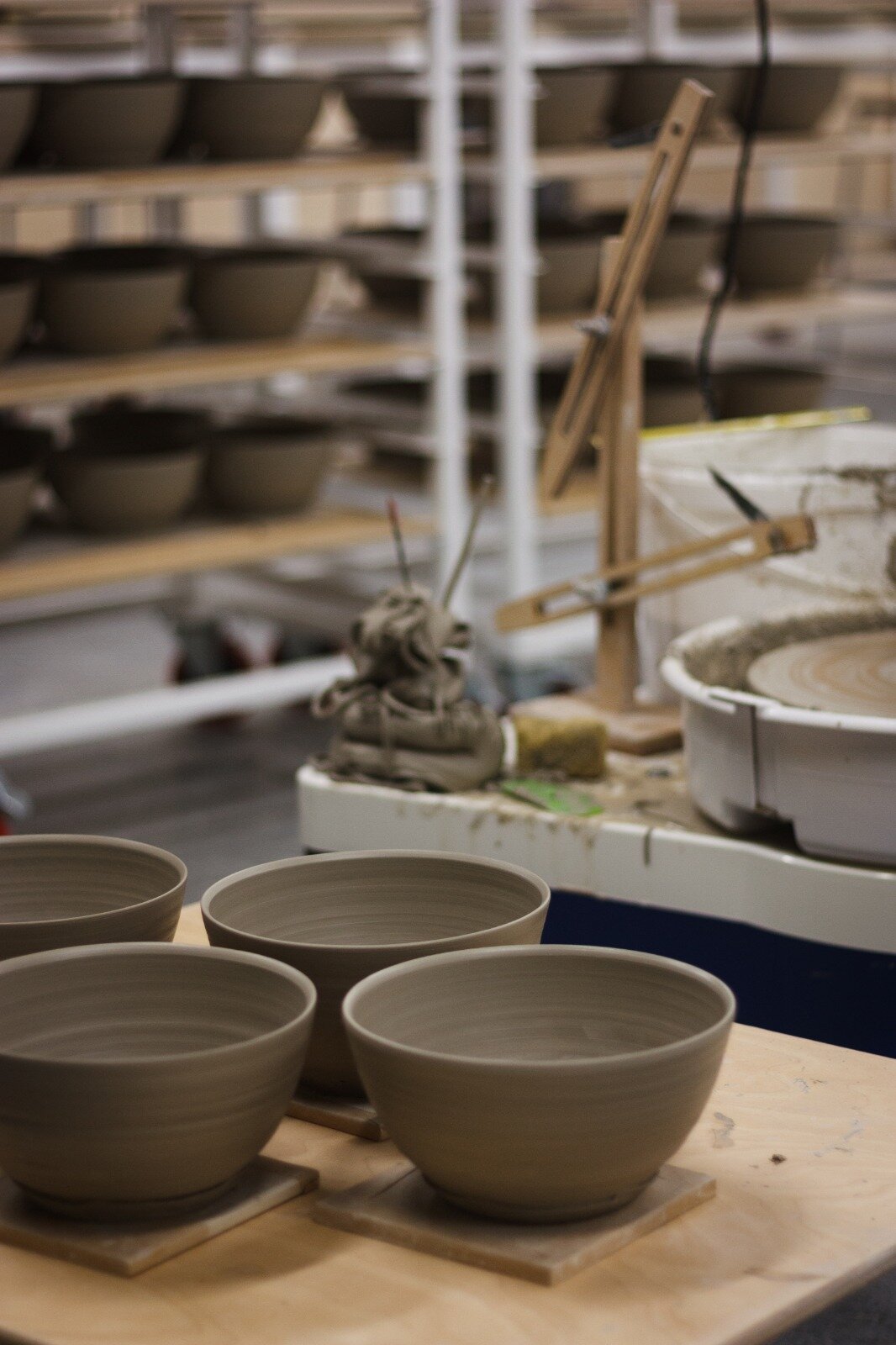
Looking back, the House of Fu project sits at a turning point. It was a legitimate, demanding, and generous collaboration - one that demonstrated what the studio could do, and also helped clarify what it needed in order to work well. It didn’t lead us further into large-scale production, but it sharpened our understanding of where our values, capacities, and ambitions truly sit.
As the work continued, House of Fu returned with further orders, and new enquiries began to follow. With that came questions about scale - not just whether we could produce more, but what that would require in terms of people, systems, and attention. At the time, those questions were still open. We kept going, learning as we went, without yet having the distance to fully understand what scaling would ask of the studio.