
Working into a role: Milly at Sunken Studio
Arrival and context
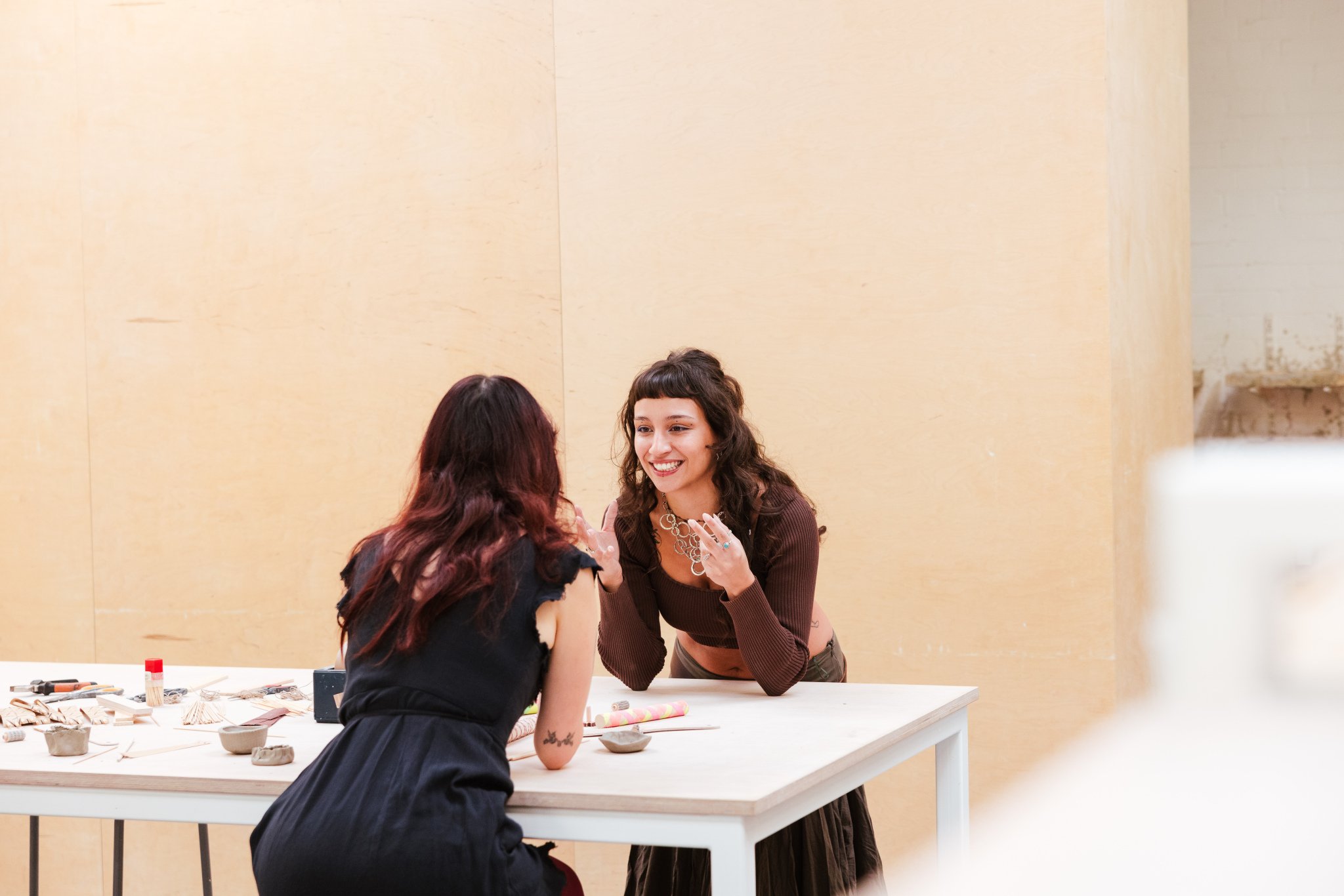
When Milly first arrived at Sunken Studio, it was during a period of significant uncertainty and change. She joined through a short-term employment scheme at a time when the studio was experimenting with different ways of supporting day-to-day activity. We were learning, in real time, what it meant to work alongside others, and how roles take shape when circumstances are shifting.
That period was defined less by problems than by people working things out - on both sides. Roles were flexible, responsibilities evolved quickly, and expectations weren’t always fully formed. It was an early time of learning about readiness: understanding not just whether support was helpful, but what kind of structure was needed for that support to be meaningful and sustainable.
Finding a way of working
What became clear over time was Milly’s adaptability. She moved easily between tasks, and more importantly, between people. There’s a steadiness to her - an optimism that doesn’t disappear when things are awkward, busy, or physically uncomfortable. That quality has shaped how she works across the studio.
Milly’s role is inherently customer-facing, but not in a fixed or front-desk sense. She moves through the studio, engaging with members and course participants as they arrive, settle, and return. She oversees member events, manages ongoing communication, and follows up on questions or issues that emerge through everyday use of the space. That continuity - being attentive before, during, and after sessions - allows her to build rapport and notice patterns that aren’t always immediately visible.
Attention and feedback
A key part of her work is paying attention to how people experience the studio in practice. She feeds that back into the team through conversations and reporting that reflect activity across the studio - from engagement and attendance, to how people move between courses, membership, and events. That awareness has helped sharpen our understanding of in-studio selling, not as a transaction, but as a form of relationship-building grounded in trust, timing, and familiarity.
Roles evolving on both sides
As the studio became more established, Milly’s role continued to develop. Her background is in fine art, but her day-to-day work brought her into close contact with how the studio functions - operationally, financially, and culturally. She works closely with me, and with Chris, building a shared understanding of how decisions are made and why certain constraints matter.
At the same time, my own role was changing. Each point at which the studio gained more permanence - whether through people, programmes, or infrastructure - required a shift in how I related to it. Marketing has long sat with me, and I found it difficult to let go of, not because the work couldn’t be shared, but because much of it lived in my head. We have clear processes for many areas of the studio, but it became apparent that I hadn’t articulated expectations or priorities clearly enough for this role.
Making expectations visible
It wasn’t until taking part in the Create Growth Programme, alongside focused work on storytelling, that this began to change. We tell stories all the time, often factually and accurately, but bringing reflection and narrative together in a way that’s genuinely useful to others requires a different kind of clarity. Clarity about our plot has made it possible to delegate with more confidence, and to create space for others to take ownership.
Ongoing practice
Milly’s move into marketing, alongside her digital marketing degree apprenticeship at Leeds Beckett, has grown out of that shared learning. Onboarding isn’t a one-off moment; it’s an ongoing practice. It involves context, trust, and allowing roles to evolve over time. Letting go doesn’t mean stepping away - it means being clear enough about direction that others can work with autonomy.
Looking back
Looking back, Milly’s development reflects a wider pattern in the studio’s growth. Both have involved adapting to change, learning through doing, and gradually moving into something more defined. It’s a reminder that development doesn’t always come from adding more. Often, it comes from paying closer attention to what’s already there, and giving it the structure it needs to work well.