
What I’ve learned from being told to stop
Recently, I’ve been thinking about the times when learning has genuinely changed how I work. Looking back, they all share one thing: each involved being told to stop.
Stop doing what already worked.
Stop relying on familiar habits.
Stop long enough to work out why.
One of the clearest examples of this was when I went to study ceramics in the US. By then, I’d already spent time teaching in community education and working from my own studio. I had momentum, routines, and ways of working that felt settled.
The programme was small, highly selective, and intense. Early on, I was asked to stop making the work I was familiar with and take it apart - to understand what was driving it, and what assumptions I was relying on. There was little room to hide, and not much else to do except work. It was unsettling, and for a long time I felt lost. But that uncertainty was worth the crisis and the accompanying sense of charlatanism.

Work made during my MFA in the US, with pieces from the years immediately following, while exhibiting and continuing to develop the work.
What that created was space - not just physical space, but time. Time to think without having to decide immediately. Time to repeat processes, to sit with not knowing, and to let questions surface. Making allowed the hands to stay busy while the mind had room to reflect.
What stayed with me wasn’t the ceramics, but the interruption. I didn’t arrive knowing what form my work would take next, but I recognised that being asked to stop mattered.
That same pattern has repeated throughout my working life - taking on formal teaching roles, moving from working alone to being part of a team, and eventually setting up Sunken Studio. Each shift required a pause, and each time learning came from allowing other people’s perspectives to disrupt my own habits.
I’ve been thinking about this again recently while taking part in the Create Growth Programme. I wouldn’t have been ready for it at the beginning of setting up the studio - it would have been overwhelming rather than useful. Timing matters. Being open to learning isn’t just about willingness, but about having enough lived experience for the questions to jolt.
These days, I still make - not pots at the moment, but quilts. The process is different, but the role it plays is similar. Repetition and piecing create time to think, bringing together elements that don’t initially seem connected.
In a world that often demands constant motion, that kind of making creates the space I need to process. Progress, in the studio and elsewhere, rarely comes from rushing forward. More often, it begins with a pause - and the readiness to ask why before deciding what comes next.
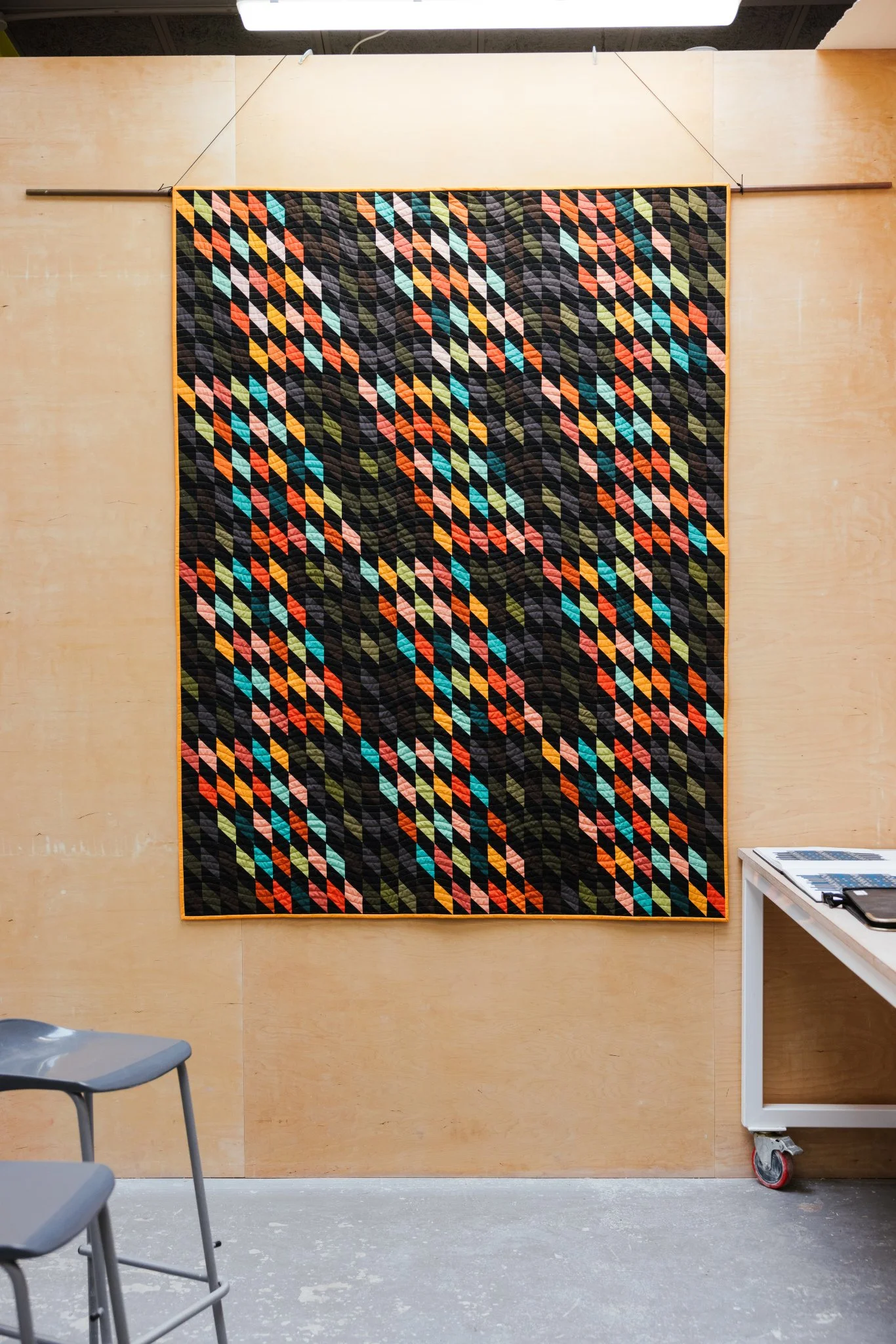
Recent quilt work - a different material, the same underlying interests.