Hey Clay!: early projects and shared making
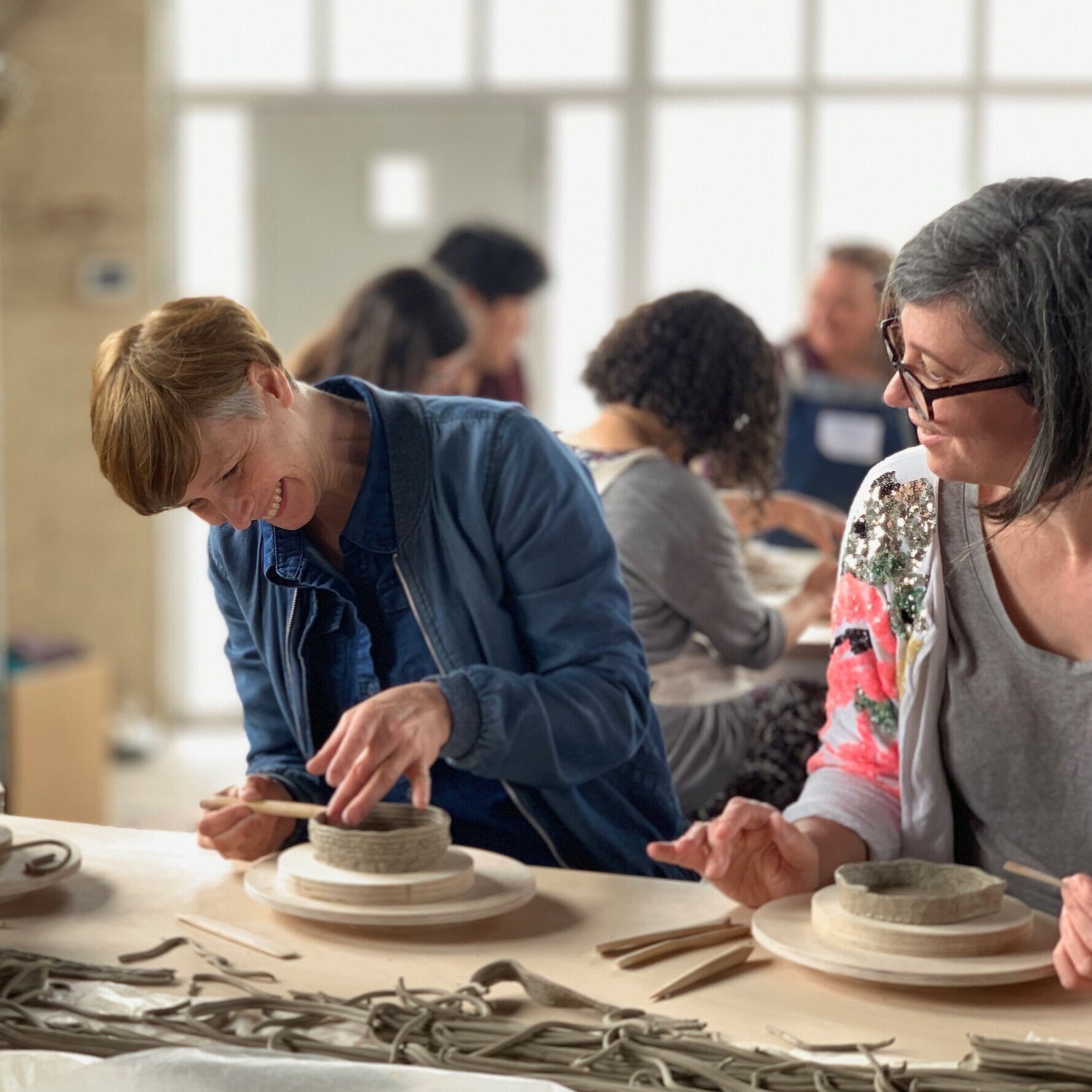
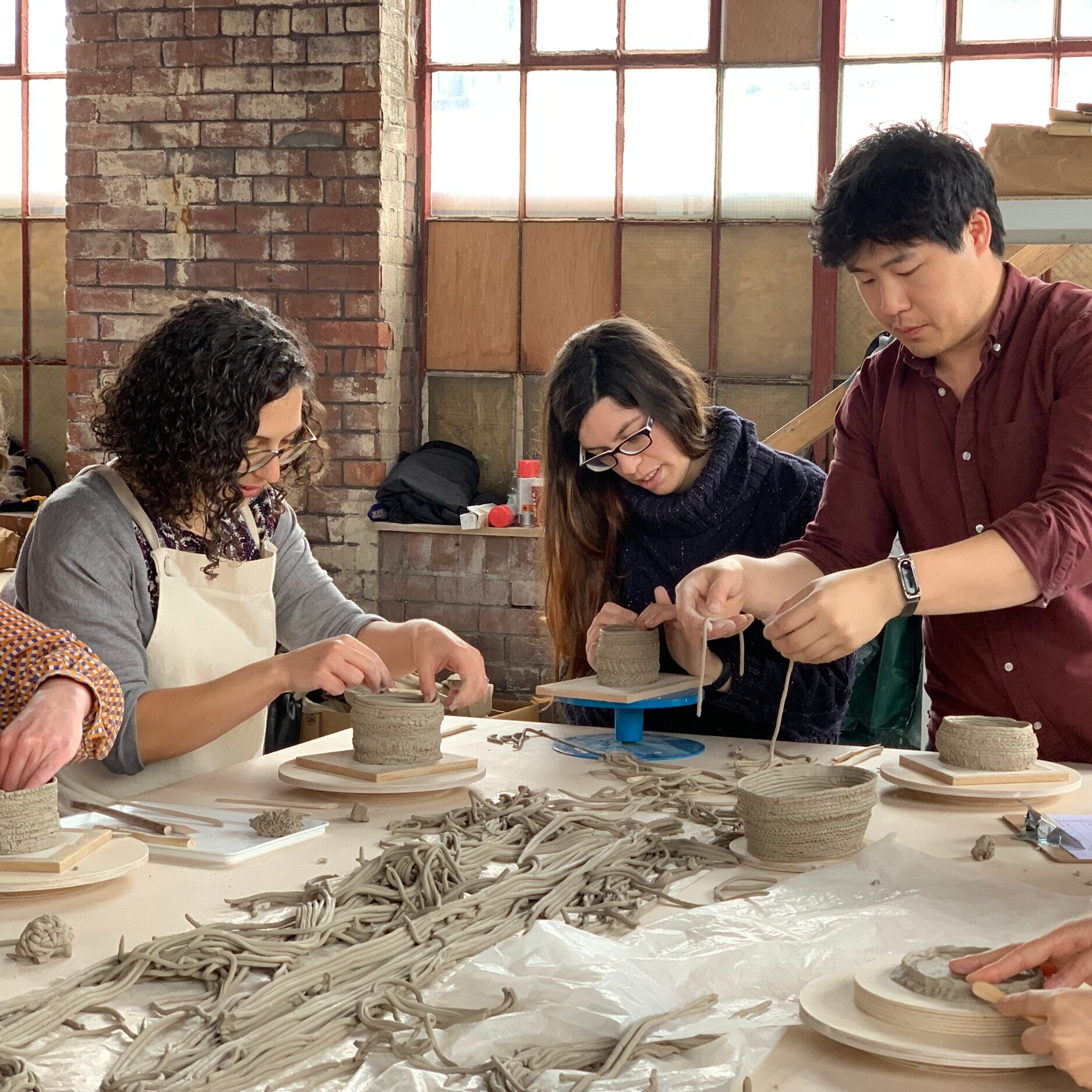
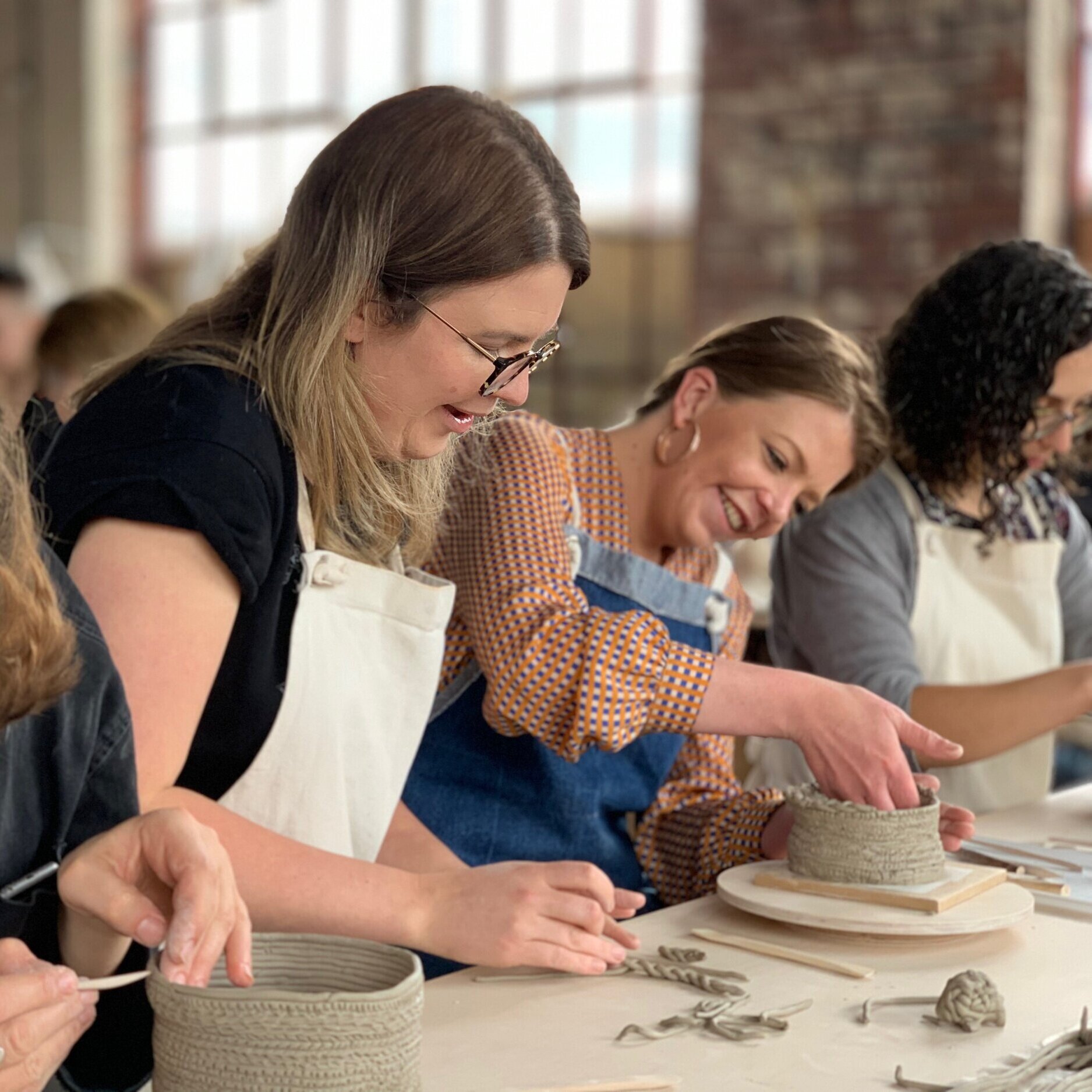
We’ve been a Hey Clay! venue. In 2018 and 2019, that took the form of two public projects: a large-scale workshop at Duke Studios, and our first open day in the new studio space. Both sat within a period of rapid change, experimentation, and public-facing work.
Hey Clay! is a national initiative led by the Crafts Council, forming part of the BBC Get Creative campaign. It offers free opportunities for people to work with clay. In both cases, we adopted a format that prioritised access, collaboration, and curiosity over finished outcomes. Our Hey Clay! projects also represent the only arts funding the studio has received. Everything else has been built without that support, which gives those projects a wider context when looking back.
What stands out most from that time is the sense of buoyancy around the studio. There was a feeling of momentum, and of being watched with generosity as things took shape. People who had attended earlier workshops returned as volunteers. Colleagues I’d worked alongside in previous roles stepped in to help run sessions. The support was practical, hands-on, and rooted in trust - people quite literally putting their time and energy behind the studio at a point when it mattered.
Both projects focused on scale. At Duke Studios, and later in the new space on Carlisle Road, participants worked collaboratively to build pots at different sizes - small, medium, and large. The emphasis wasn’t on individual ownership or refinement, but on negotiation: how forms grow, how decisions shift when multiple hands are involved, and how clay behaves when pushed beyond the familiar. Surfaces carried the traces of many people - subtle marks left by different fingertips, layered over time.
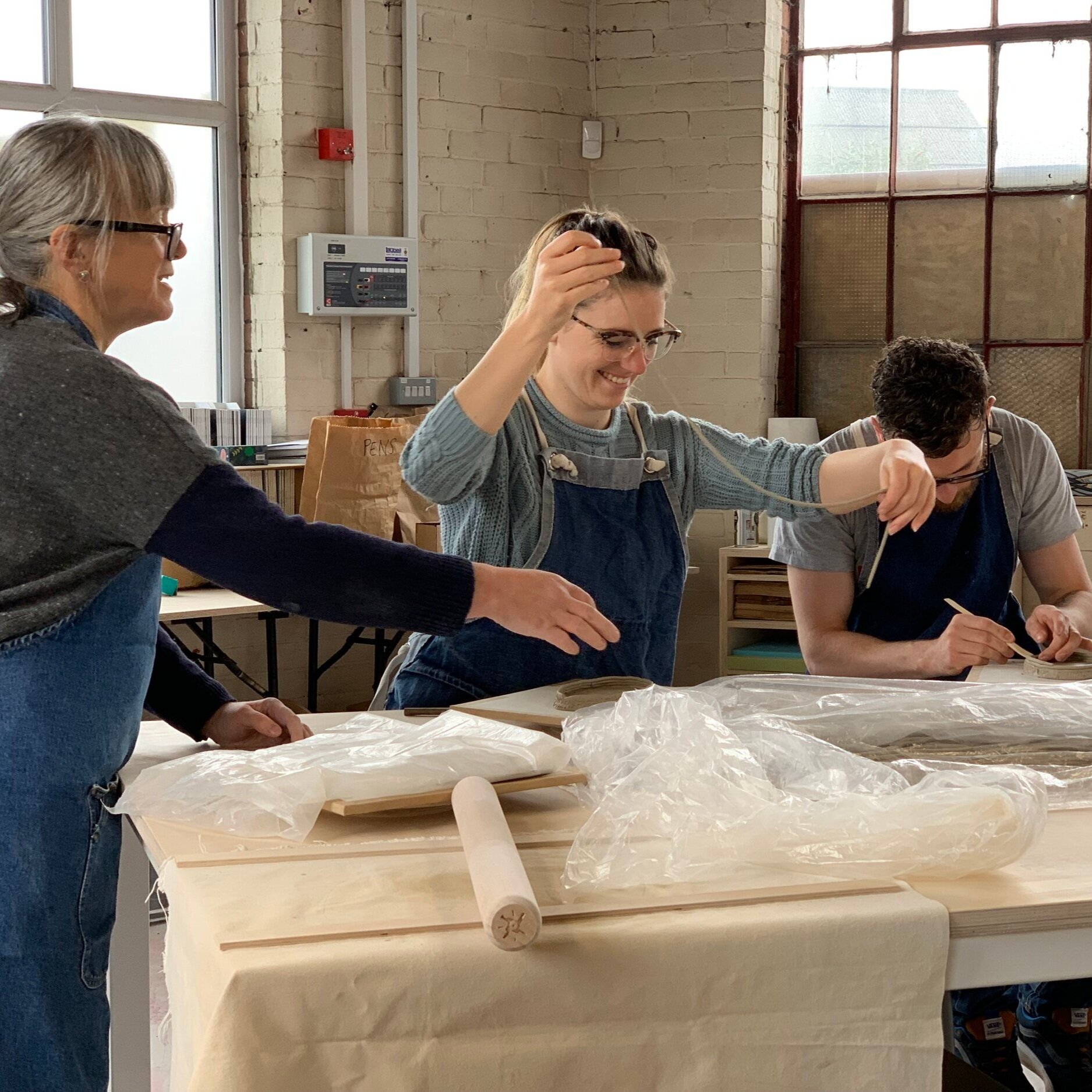
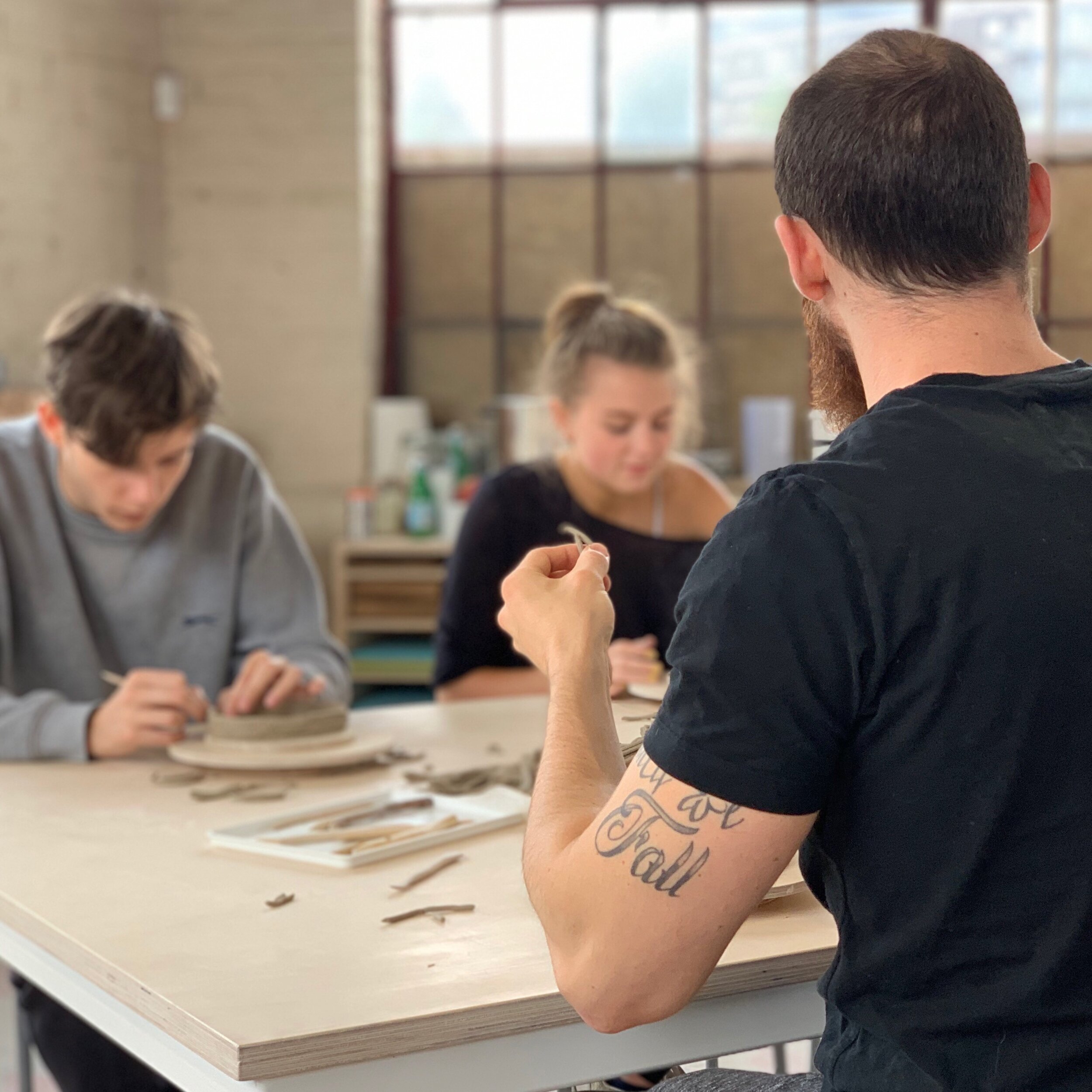
From a teaching perspective, these projects brought together different strands of my experience. They drew on approaches I’d developed teaching foundation studies - environments where learning happens through intensity, constraint, and experimentation - and placed them into a more open, public setting. There was a sense of productive play at work, but it was grounded in material knowledge and attention rather than novelty.
More than 80 people took part across the open day alone, supported by a dedicated team of volunteers. It was an early opportunity to test how the new studio might function as a shared space - not just for courses, but for collective making at scale.
Those projects were shaped by a particular set of conditions: public funding, a moment of transition, and a network of people willing to show up. They don’t represent a model we’ve tried to replicate often. The studio has moved towards more sustained, day-to-day forms of learning. Still, that period remains important. It showed what becomes possible when timing, support, and collective effort briefly align.
I’ve always enjoyed that kind of live, large-scale work. It brings a different energy into the studio and asks different things of both material and people. It’s something I still think about, even as the studio continues to evolve in other directions.